Arnold Hospitality Press · Chef David Arnold
Insights
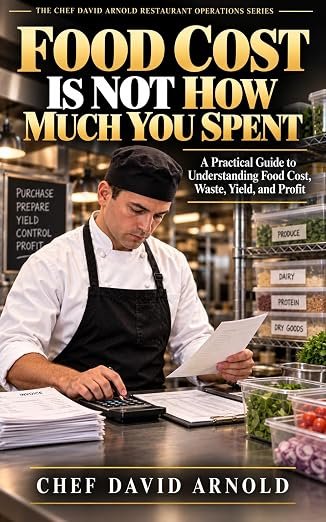
FOOD COST IS NOT HOW MUCH YOU SPENT
A Practical Guide to Understanding Food Cost, Waste, Yield and Profit
Get everyone working from the same number.

Inside the operation
Purchasing has one answer. The kitchen has another.
The invoices are entered, the deliveries arrive and a percentage appears on the report. But purchases, cash paid and food actually consumed describe different things.
This Insight follows the operating truth behind food cost: beginning and ending inventory, purchases, credits, transfers and the periods in which the records belong.
Chef David Arnold asks operations and finance to agree on the evidence before management argues about the percentage. A useful number must describe what happened well enough to support a decision.
Written for working restaurant owners, chefs and managers who need practical decisions they can put to work during an actual shift.
The book’s practical approach
Get everyone working from the same number.
Name the Number
Separate purchases, payments, inventory and the cost of food consumed.
Align the Records
Use consistent units, periods, credits and transfers so the kitchen and finance see the same operation.
Verify Before Acting
Reconcile the count and the supporting records, then investigate the operating decisions behind the result.
Put the book to work
Bring the guidance into your operation.
Explore the existing companion resources and use the book’s operating guidance alongside the facts from your own restaurant.
Read an excerpt · Author’s Note: No Killing the Bean Counters
A Little Taste of the Book
From Food Cost Is Not How Much You Spent
One of the fastest ways I know to make people uncomfortable in a consulting engagement is to ask for the numbers. I do not mean the sales report somebody already printed because it looks good. I mean the numbers underneath the operation: purchases, inventory, credits, transfers, cost of sales, payroll, and the records that explain how management arrived at the percentages it is using to make decisions.
I have a set of numbers I ask for in almost every consulting assignment. Sooner or later, I want to talk to the finance people. Sometimes there is a real finance department and the conversation is easy. In plenty of operations, there are just enough people in the office to pay the bills, get the employees paid, file what has to be filed, and keep the government from becoming the most active visitor in the building. I understand that. I have never enjoyed spending money simply for the pleasure of having more administrative people around.
But if management wants an accurate picture of the health of the company, sound financial practices have to reach the front line. The kitchen cannot live in one version of reality while accounting lives in another. Purchasing cannot say one thing, inventory another, and the profit-and-loss statement something else entirely. Eventually those versions of the business collide, and the collision usually arrives as a surprise nobody wants.
That is why somebody has to check and recheck. Call them accountants, bookkeepers, controllers, finance people, bean counters, or the person who keeps asking why the invoice total does not match the receiving report. The title does not matter nearly as much as the discipline. Verification keeps us honest.
Continue reading in Food Cost Is Not How Much You Spent
Available editions
Choose your edition
Continue reading the published Kindle edition. Amazon provides current pricing and availability for your location.

About the author
Chef David Arnold
Executive chef, international foodservice operations consultant, author, instructor, and mentor, Chef David Arnold brings more than forty years of hospitality experience to practical management work. His published professional background spans restaurants, hotels, institutional catering, central kitchens, and food manufacturing.
Chef David connects financial verification with the practical work of purchasing, receiving, inventory and production.
Continue the work
Related reading
INSIGHTS
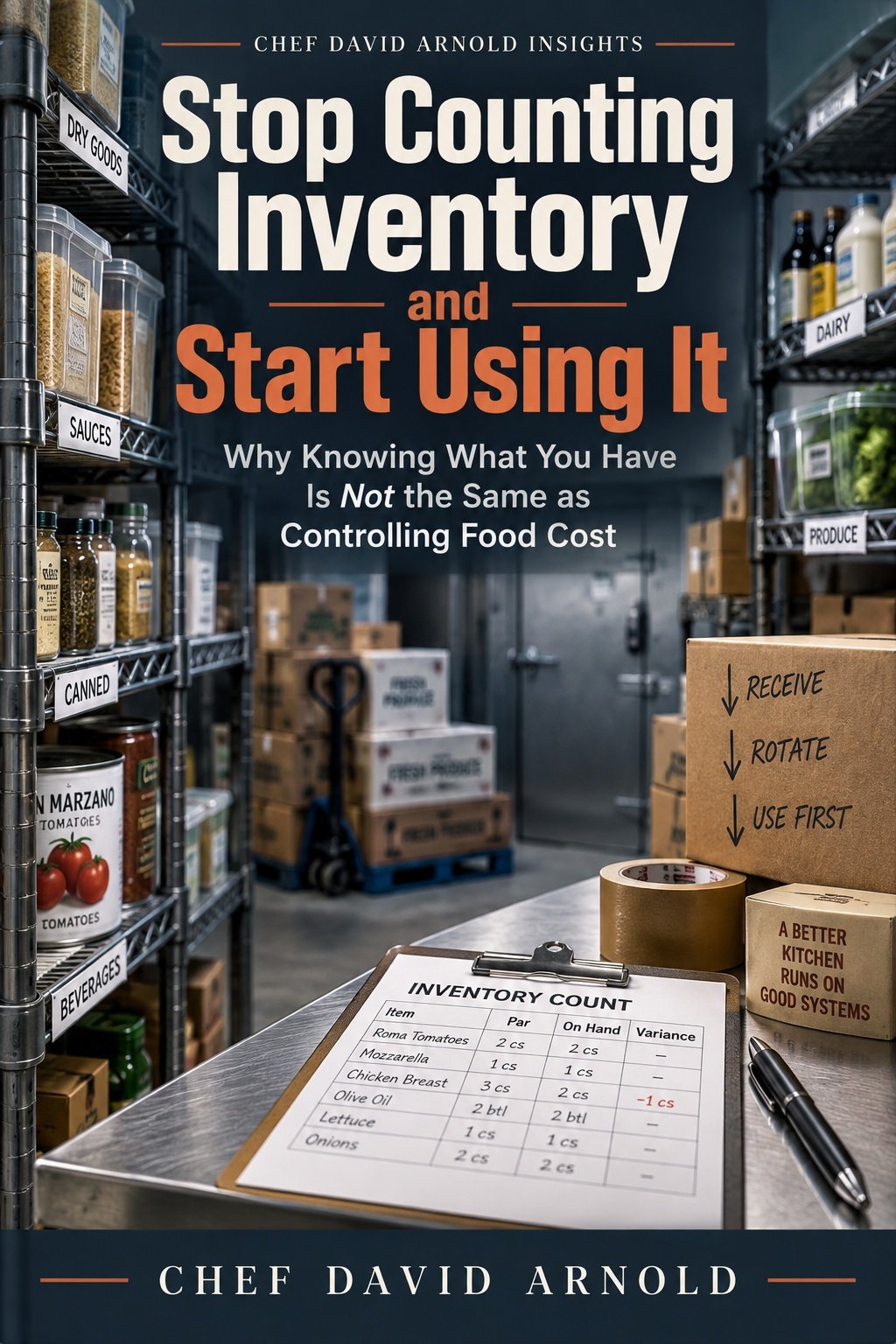
Stop Counting Inventory and Start Using It
Turn inventory counts into better purchasing, prep, rotation, and cash-control decisions.
Explore this book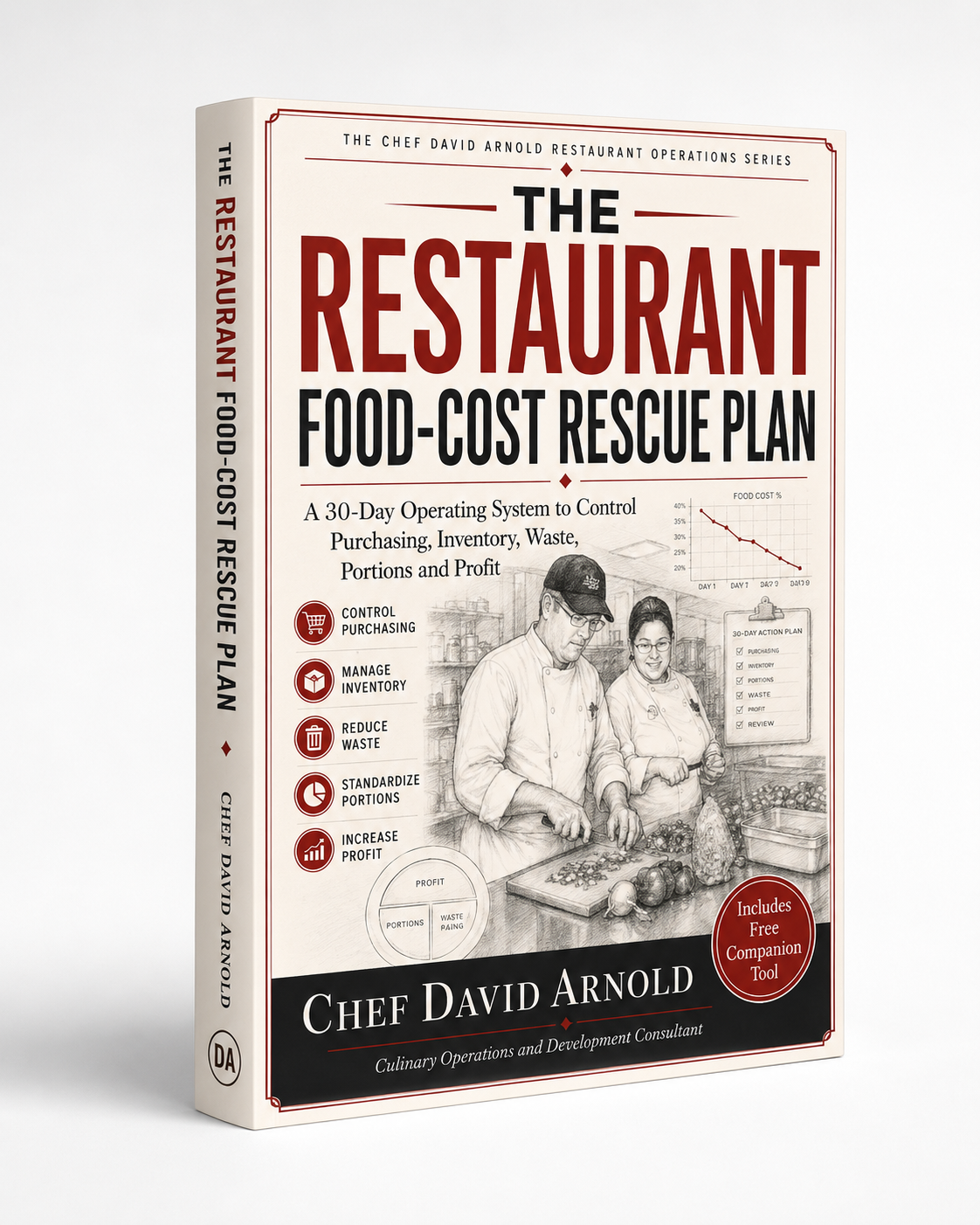
RESTAURANT OPERATIONS SERIES
The Restaurant Food Cost Rescue Plan
Find the leaks in purchasing, inventory, portions, and waste.
Explore this bookMore resources and reading: Publications · The Bag Is Part Of The Meal
Practical support
Need help applying this in your operation?
Discuss the operating problem, the evidence you have and the practical support your management team needs with Chef David Arnold.