Arnold Hospitality Press · Chef David Arnold
Restaurant Operations Series
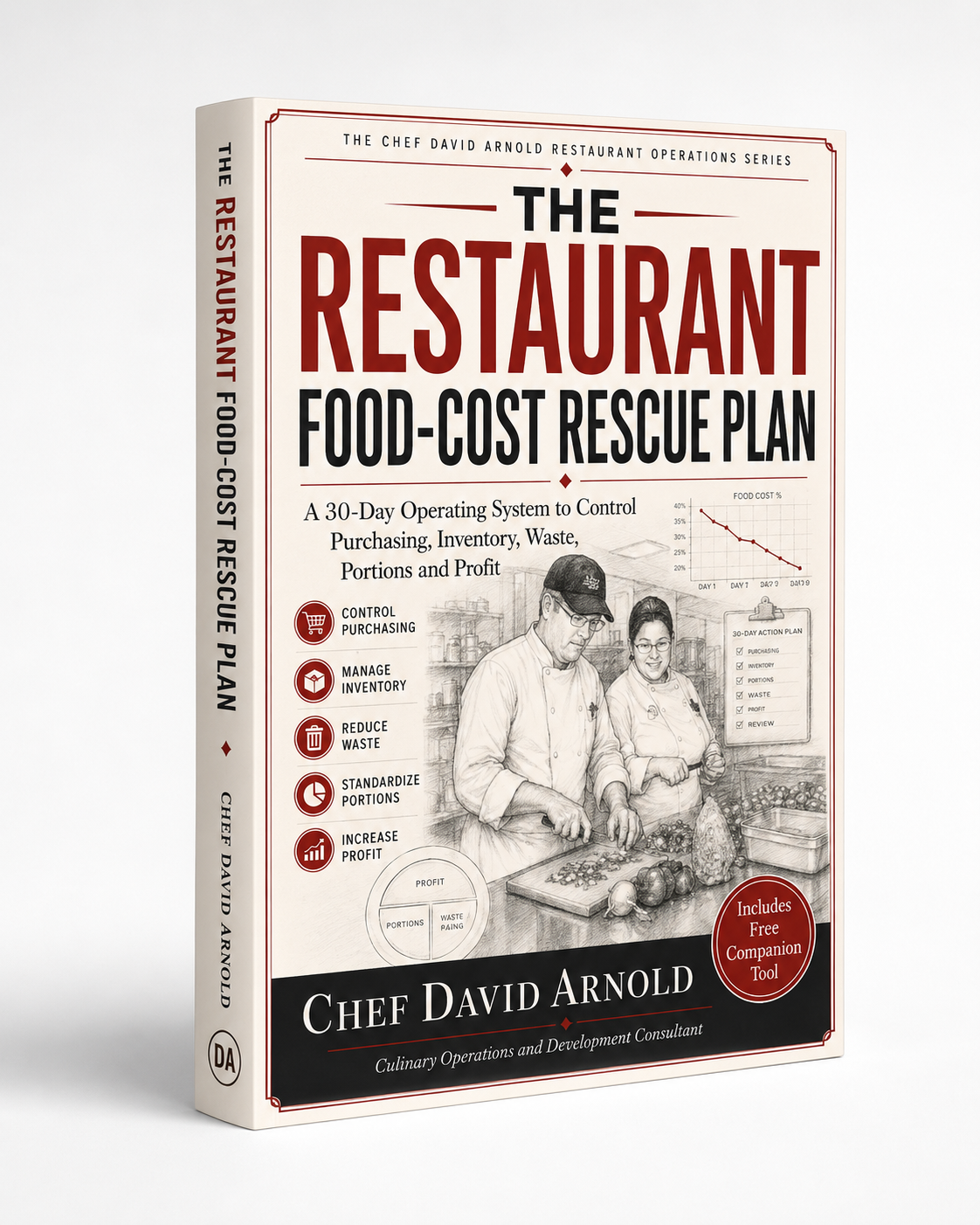
THE RESTAURANT FOOD-COST RESCUE PLAN
A 30-Day Operating System to Control Purchasing, Inventory, Waste, Portions and Profit
The food has already moved by the time the financial statement arrives. Find the small operating losses that quietly consume your margin—and build the controls that keep them visible.
Where the margin disappears
The invoice is signed. The prep is finished. The loss is already in motion.
A delivery arrives during lunch. Someone signs for it without checking the weight. A cook adds a little extra to a portion because it looks right. Another batch goes into production before anyone checks what is left from yesterday.
Each decision seems small. Repeated across deliveries, preparation periods and services, those decisions can become the difference between a busy restaurant and a profitable one.
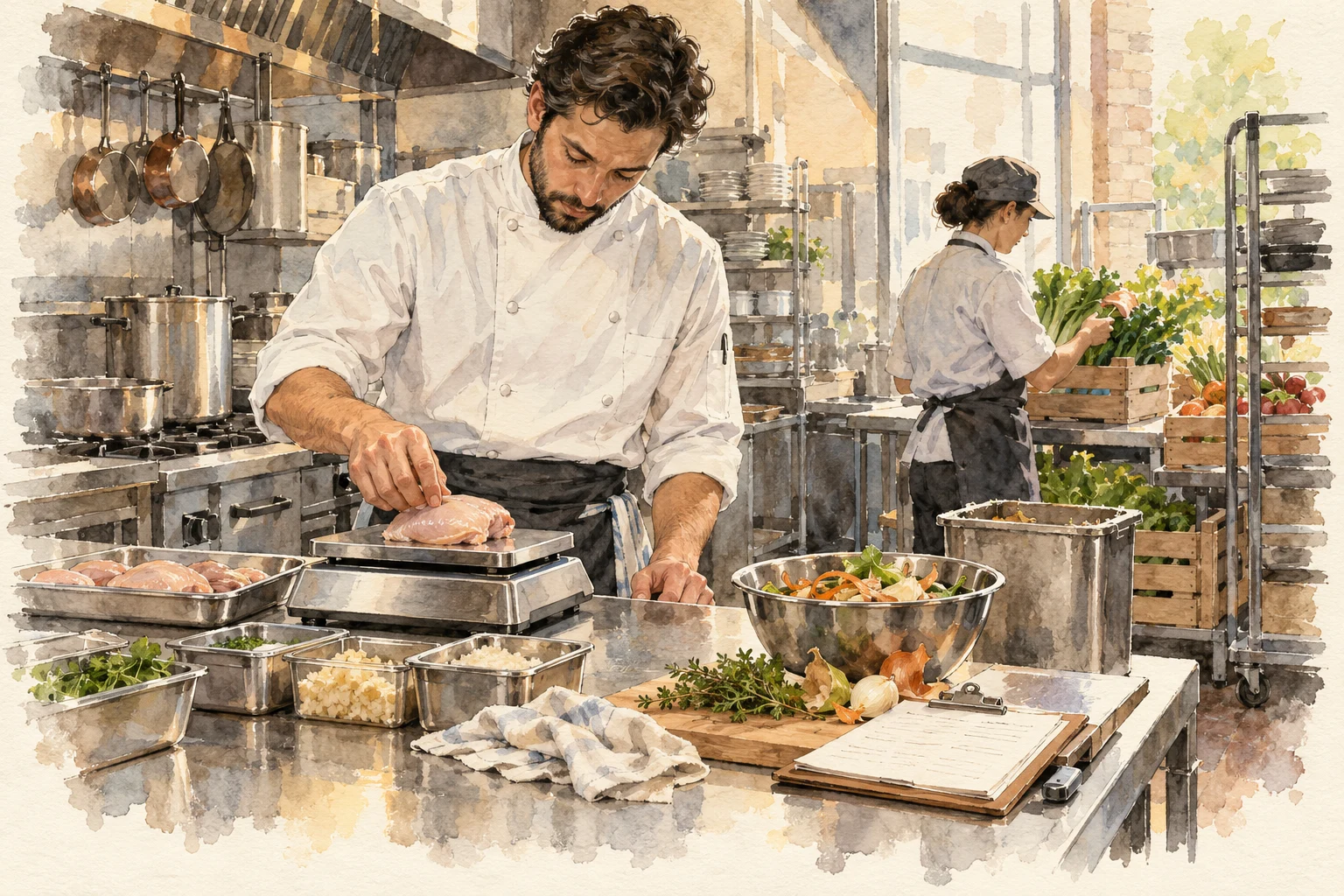
The Restaurant Food-Cost Rescue Plan follows the product through the operation: what you buy, what you receive, what you store, what you prepare, what you serve and what you discard.
Chef David Arnold turns those everyday movements into a practical system of measurement, standards and accountability. The objective is a management routine that continues after Day 30.
Control the leaks. Protect the profit.
A working operating system
Follow the food. Find the variance. Assign the control.
Part I
Establish the Facts
Know your numbers, conduct the diagnostic, build reliable inventory and find the losses hidden behind the reported percentage.
Part II
Control the Supply Chain
Write purchasing specifications, purchase for profit, verify deliveries and protect product through secure, disciplined storage.
Part III
Control the Kitchen
Standardize recipes, calculate true cost, measure portions, plan production from demand and stop waste at its source.
Part IV
Engineer the Menu
Understand contribution, price with current costs and simplify the menu where complexity is consuming capacity and margin.
Part V
The 30-Day Rescue
Stop immediate losses, establish standards, correct the menu and lock in accountability with ownership, deadlines and verification.
Built for real restaurant operations
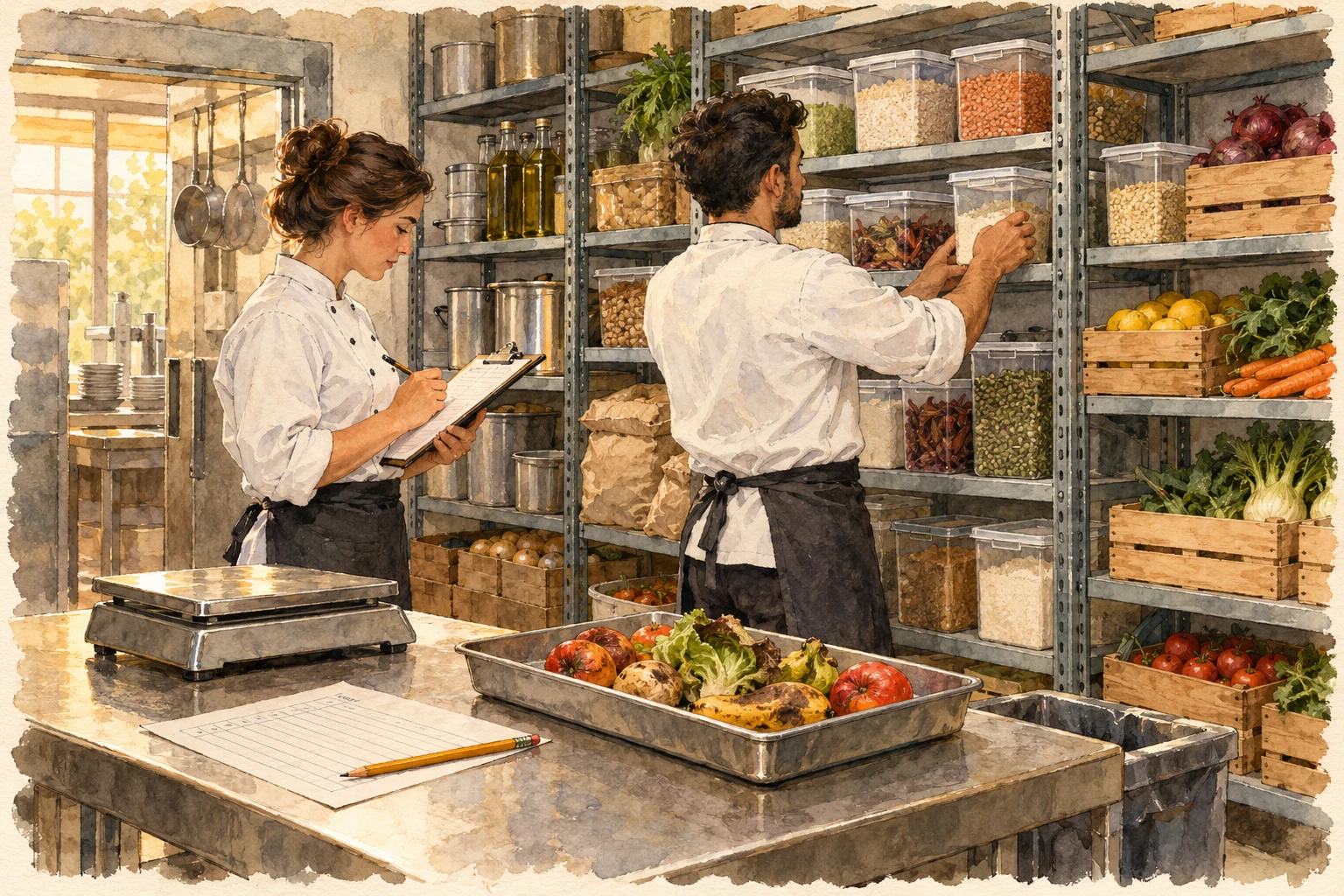
A book you can take into the storeroom.
Written for working owners, chefs, kitchen managers, general managers and supervisors who need practical controls they can use during an actual shift.
The book includes operating forms for diagnostics, inventory, receiving, purchasing specifications, yield tests, recipes, waste, production, menu engineering and daily management checks.
Start with your own numbers
Use the existing free Food Cost Calculator to establish the numbers you want to investigate. Bring current purchasing prices and measured operating information.
Check edible yield · Test menu pricing · Explore the recipe converter
Read an excerpt · Introduction
A Little Taste of the Book
From “Food Cost Is Not an Accounting Problem”
When a restaurant reports a food-cost problem, the first instinct is often financial: negotiate harder with suppliers, raise menu prices, reduce portions, or blame inflation.
Sometimes one of those actions is necessary. But none of them should be the starting point.
Food cost is an operating result. The percentage that appears on the profit-and-loss statement is simply the final summary of hundreds of decisions that have already occurred throughout the restaurant.
A supplier was selected. A product specification was written—or was not. An order was placed. A delivery was counted—or was not. A case was accepted, stored, opened, trimmed, cooked, portioned, served, wasted, transferred, consumed by an employee, or discarded. Every one of those movements affects the eventual number.
That is why this book treats food cost as an operating-control problem before it treats it as an accounting problem.
The numbers are essential. They tell management whether the system is producing the expected result. But the numbers do not correct the system. Managers do that by tracing the variance back to the behavior, transaction, standard, or missing control that created it.
The first objective of this 30-day rescue is therefore not to force food cost down as quickly as possible. It is to establish the truth.
What should the food have cost for what was sold? What did it actually cost? How large is the gap? Where was that gap created? Which losses are documented? Which are still unexplained? Which menu items are structurally weak even when perfectly executed? Which management controls exist on paper but fail during a busy service?
Those questions separate a temporary cost-cutting exercise from a sustainable operating system.
The book is organized in five parts. Part I establishes the facts and creates a defensible measurement baseline. Part II controls purchasing, receiving, storage, and the supply chain. Part III controls recipes, yields, portions, production, and waste inside the kitchen. Part IV connects those controls to menu contribution and pricing. Part V turns the work into a 30-day implementation plan with ownership, deadlines, verification, and weekly reporting.
Continue the investigation in The Restaurant Food-Cost Rescue Plan.
Arnold Hospitality Press · Book companion
Foodservice Operations HUB
Create one account or sign in to your existing account to open the included basic Food-Cost Rescue companion collection. No manual approval or recurring subscription fee is required. Use the available operating tools, Leak Finder, linked 30-day actions and original printable Appendices A–K. Confirm a save before changing devices; sign in to the same account and reload to continue your saved work.
The Second Edition is in final production. It is not yet available for purchase; the Amazon links below are for the published earlier edition.
Published earlier edition
Read the existing edition
The earlier edition is available on Kindle and in paperback through the existing Amazon listings below.
Amazon provides current pricing, delivery and availability for your location.
About the author
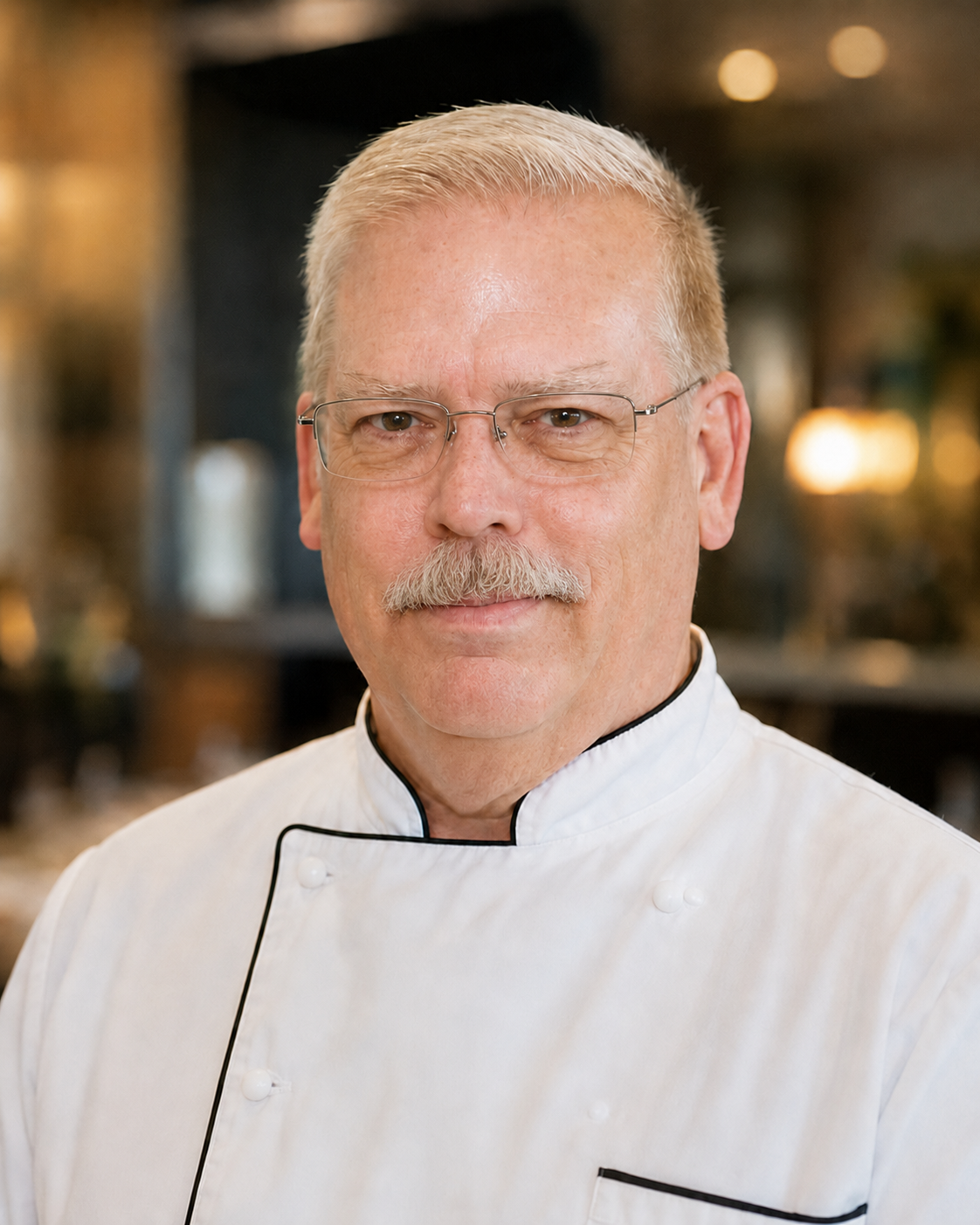
Chef David Arnold
Executive chef, international foodservice operations consultant, author, instructor, and mentor, Chef David Arnold brings more than forty years of hospitality experience to practical management work. His published professional background spans restaurants, hotels, institutional catering, central kitchens, and food manufacturing.
This book brings that operating experience to the daily controls behind purchasing, inventory, production, portions, waste and menu profitability.
Continue the work
Related reading
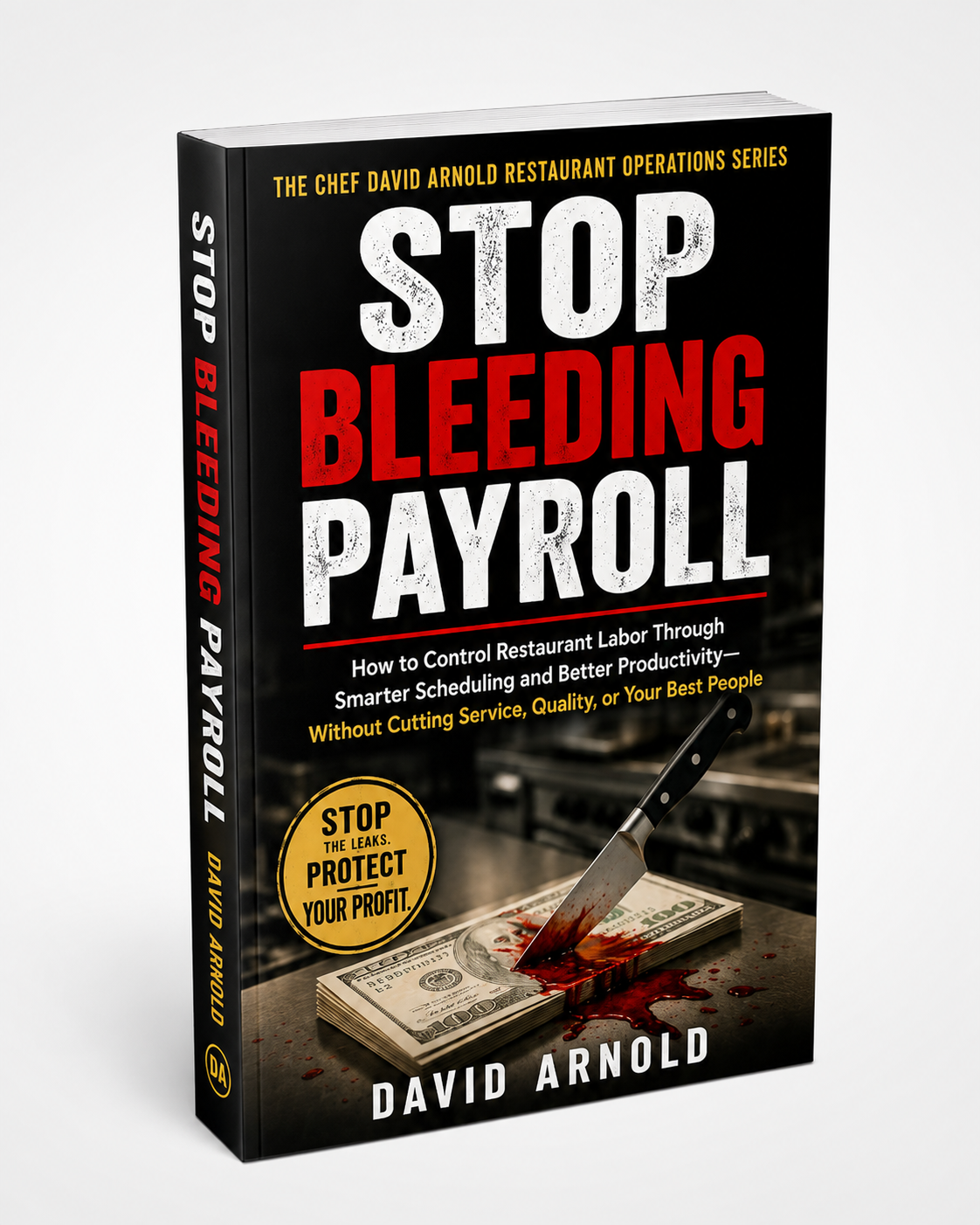
RESTAURANT OPERATIONS SERIES
Stop Bleeding Payroll
Connect food-cost discipline with smarter scheduling, productivity and management accountability.
Explore this book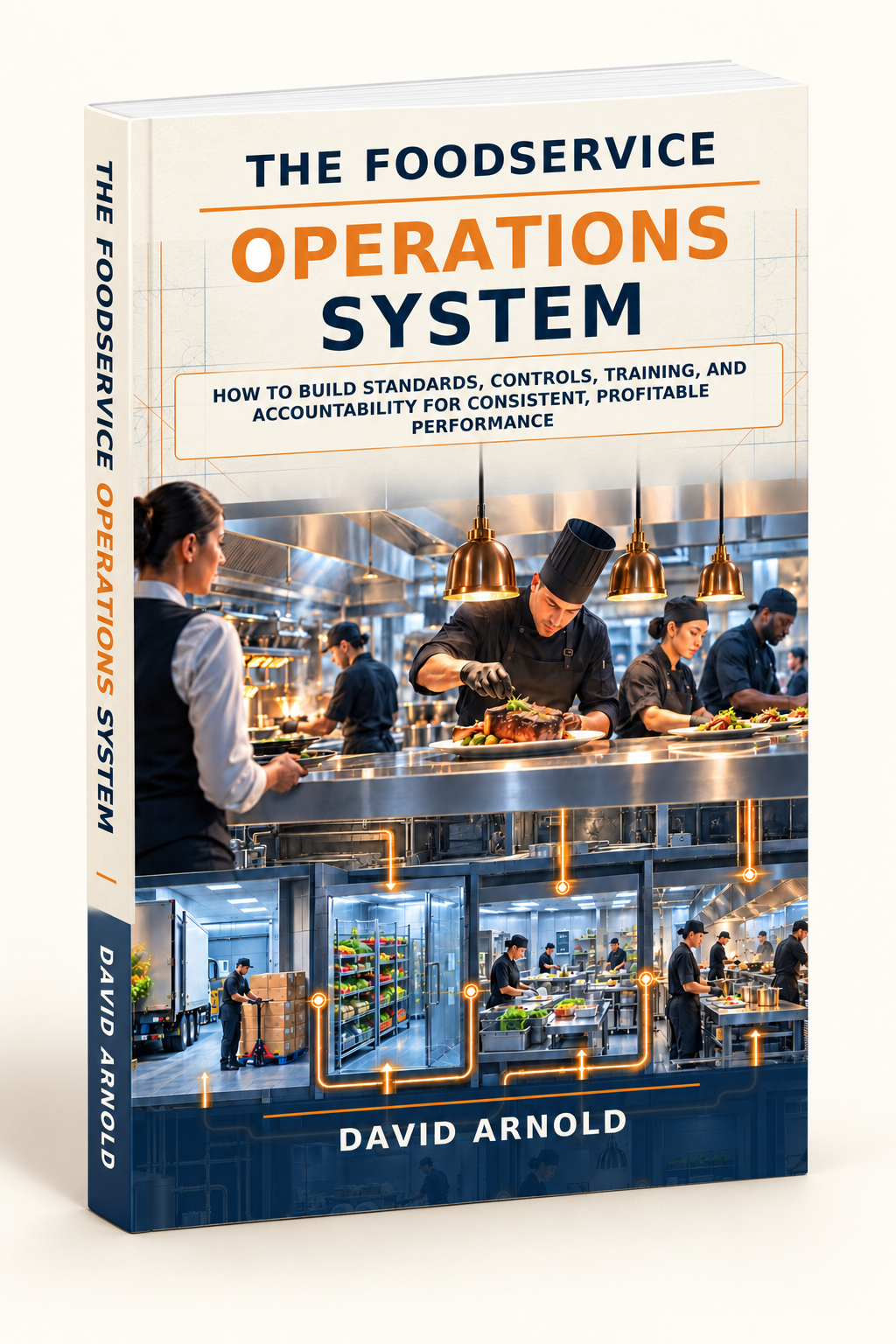
PROFESSIONAL RESTAURANT LIBRARY
The Foodservice Operations System
Build the standards, training, controls and accountability that support the whole operation.
Explore this bookFor broader recovery work, explore The Restaurant Turnaround Playbook. For daily priorities and execution, read Everybody Was Busy. Nothing Was Getting Done. For practical management support with AI, explore Run the Restaurant. Let AI Help.
Practical support
Need help finding the leaks in your operation?
A book gives you a system. If your restaurant needs a deeper diagnosis, Chef David Arnold can help your management team investigate the losses, establish workable controls and build accountability.