Arnold Hospitality Press · Chef David Arnold
Insights
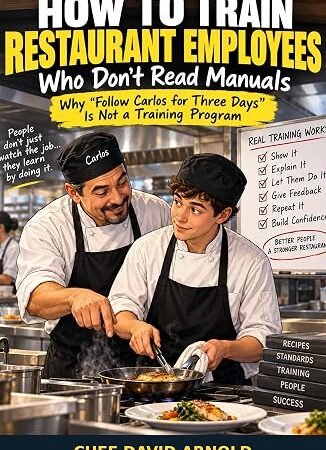
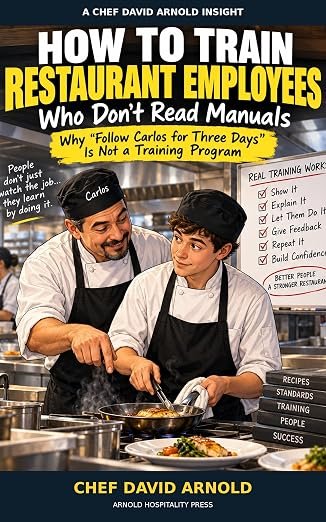
HOW TO TRAIN RESTAURANT EMPLOYEES WHO DON’T READ MANUALS
Why “Follow Carlos for Three Days” Is Not a Training Program
Training must produce an independent result.

Inside the operation
Three days of watching. Still unable to run the station.
The manual exists, the orientation is signed and the new cook has stood beside an excellent employee for three days. When the trainer walks away, the station still does not work.
How to Train Restaurant Employees Who Don’t Read Manuals examines the difference between an observation tour and a training program that builds usable ability.
Chef David Arnold connects demonstration, practice, correction, repetition and patience with the one result that matters: the employee can perform the work.
Written for working restaurant owners, chefs and managers who need practical decisions they can put to work during an actual shift.
The book’s practical approach
Training must produce an independent result.
Demonstrate the Standard
Show the correct result and explain the decisions behind the task.
Let the Employee Practice
Move from watching to supervised performance, correction and repetition.
Verify Independence
Check whether the employee can produce the required result after the trainer steps away.
Put the book to work
Bring the guidance into your operation.
Explore the existing companion resources and use the book’s operating guidance alongside the facts from your own restaurant.
Read an excerpt · A Note from the Author
A Little Taste of the Book
From How to Train Restaurant Employees Who Don’t Read Manuals
If you have ever handed a new employee a training manual, pointed toward your best cook, and said, "Follow Carlos for three days," I have some uncomfortable news for you. You probably did not create a training program. You created a three-day observation tour and hoped the employee would somehow absorb fifteen years of restaurant experience by standing close enough to it.
I learned this lesson in a restaurant that had done nearly everything management thought it was supposed to do. The company had a training manual, written procedures, experienced employees, orientation forms, trainer sign-offs, and enough documentation to prove that every new hire had officially been trained. The strange part was that several of those officially trained employees still had no idea what they were doing once the trainer stepped away.
One new cook made the problem impossible to ignore. He spent three days beside one of the restaurant's strongest cooks, watched hundreds of plates leave the station, listened to dozens of explanations, signed the training paperwork, and still could not run the station by himself. Management began wondering whether they had hired the wrong employee, while I began wondering whether the restaurant had ever actually trained him.
That difference became the heart of this story. Watching is not necessarily learning, explaining is not necessarily teaching, and signing a training form does not prove that somebody can perform the job. A restaurant only knows training worked when the new employee can produce the correct result after the experienced employee walks away.
Fixing the problem did not require a training department or an expensive system. It required understanding how people learn restaurant work, then building training around demonstration, practice, correction, repetition, and patience. It also required one uncomfortable thought: Carlos might be an excellent cook and a terrible teacher.
Continue reading in How to Train Restaurant Employees Who Don’t Read Manuals
Available editions
Choose your edition
Continue reading the published Kindle edition. Amazon provides current pricing and availability for your location.
About the author
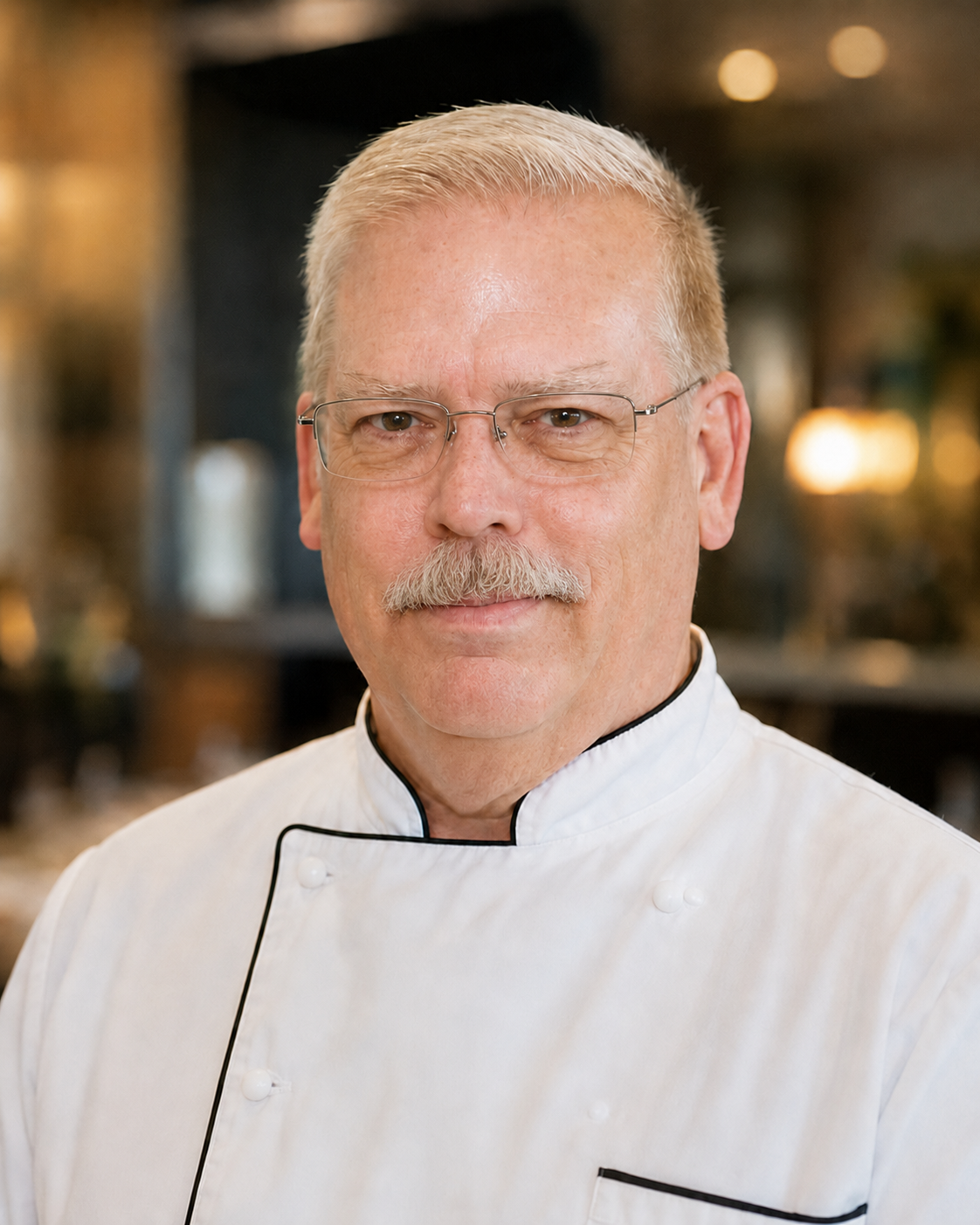
Chef David Arnold
Executive chef, international foodservice operations consultant, author, instructor, and mentor, Chef David Arnold brings more than forty years of hospitality experience to practical management work. His published professional background spans restaurants, hotels, institutional catering, central kitchens, and food manufacturing.
Chef David treats training as the development of observable capability rather than completed paperwork or time spent beside an expert.
Continue the work
Related reading
INSIGHTS
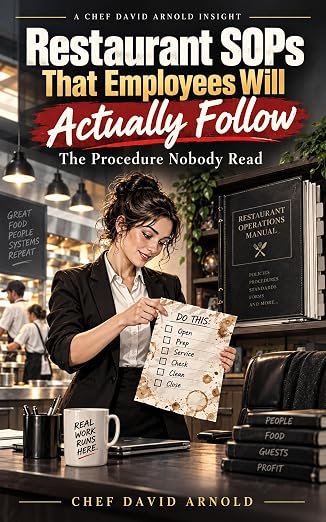
Restaurant SOPs That Employees Will Actually Follow
Write usable procedures and checklists that employees understand, managers reinforce, and teams follow during the shift.
Explore this book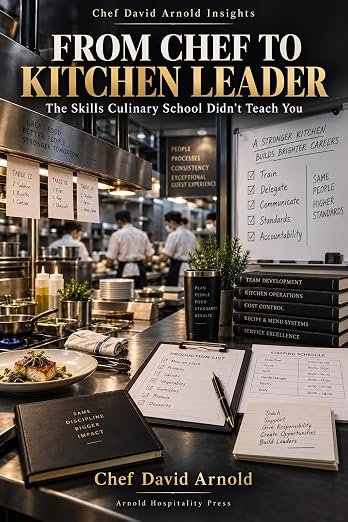
INSIGHTS
From Chef to Kitchen Leader
Develop the people skills, delegation habits, and management routines needed to move from skilled cook to effective kitchen leader.
Explore this bookMore resources and reading: Food Cost Is Not How Much You Spent · Publications · Stop Counting Inventory And Start Using It · The Foodservice Operations System · The Foodservice Operations Toolbox
Practical support
Need help applying this in your operation?
Discuss the operating problem, the evidence you have and the practical support your management team needs with Chef David Arnold.