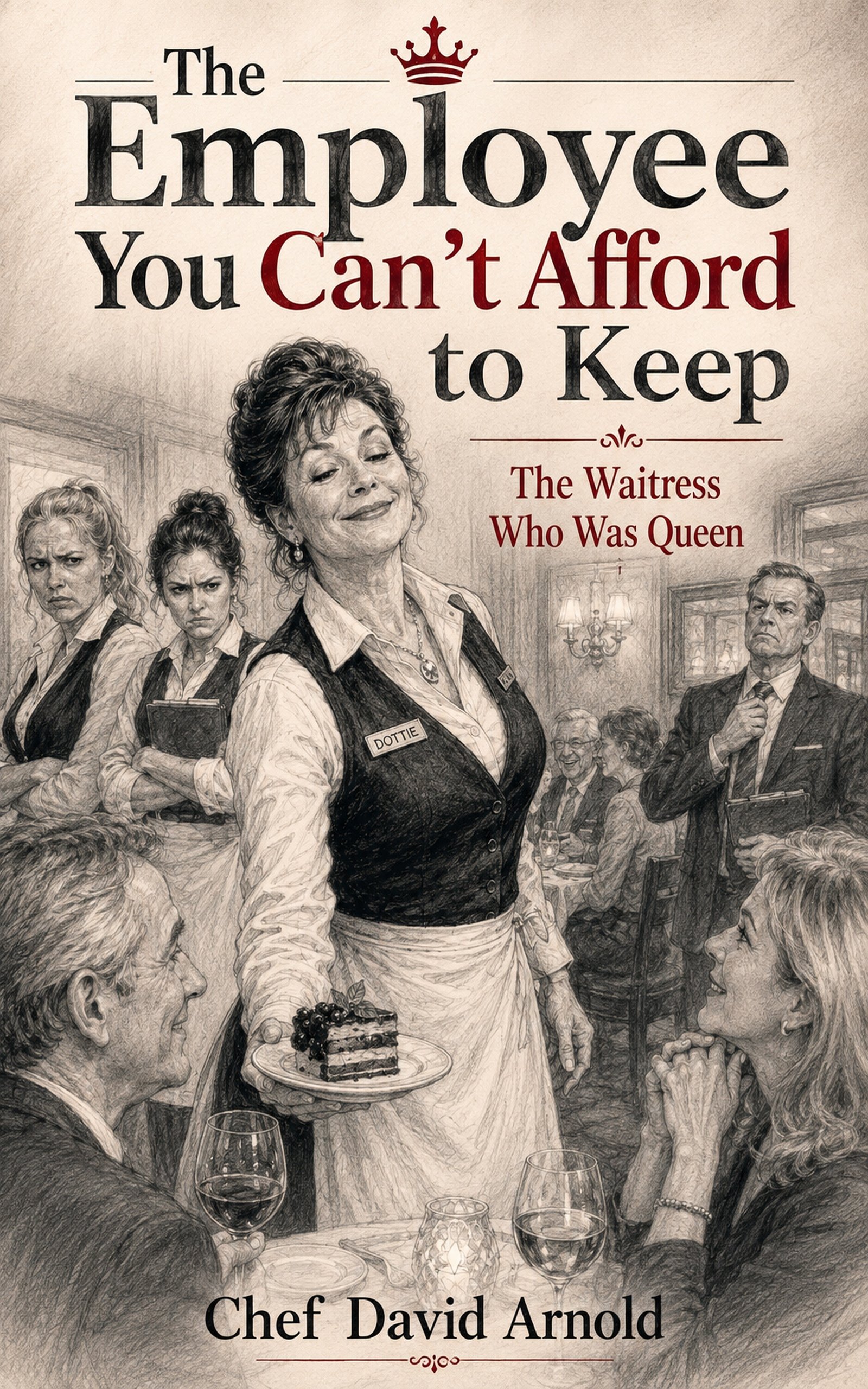
The Waitress Who Was Queen
Every restaurant that has been around long enough eventually finds one employee who becomes bigger than the job. Nobody officially gives them that authority, and there is usually no announcement that they now operate under a different set of rules. It happens slowly. They become experienced, useful, popular, difficult to replace, or some combination of all four, and before long management begins making exceptions.
At one of the first restaurants I was assigned to help open, that person was a waitress named Dottie.
Dottie was the head waitress, at least according to Dottie. I cannot remember anyone formally giving her the title, but she had claimed the position with such confidence that eventually management more or less accepted it. She carried herself as though she had been appointed by the board of directors, even though the rest of us had apparently missed the meeting.
To the customers, she was wonderful.
She remembered names, favorite tables, drink preferences, and all the little details that make regular guests feel important. Her customers asked for her, waited for her section, and filled out glowing comment cards explaining how much they enjoyed being served by Dottie.
There was, however, another reason some of those customers were so fond of her.
Dottie was remarkably generous with things she did not own.
A dessert might suddenly become complimentary. A little something extra could appear on the table. A favorite customer might receive a benefit that had never been approved by a manager and certainly had never been entered into the register. Dottie seemed to consider the restaurant’s inventory a kind of personal entertainment budget she could use to reward people she liked.
Naturally, the customers loved this arrangement. Most people are quite receptive to generosity when they are not the ones paying for it. If I walked into your house, opened your refrigerator, and started handing your steaks to the neighbors, I suspect the neighbors would think I was a wonderful fellow too.
The rest of the waitstaff definitely had a different opinion of Dottie.
They hated working with her. She was territorial, bossy, and greedy about sections, and somehow she always seemed to wind up with the tables that offered the best chance of making money. If a regular customer walked through the door, that customer immediately became hers whether or not the floor plan agreed.
Dottie could create resentment without appearing to expend much effort. She ate it for breakfast and seemed perfectly capable of finding more by lunchtime.
Management, however, kept looking at the comment cards.
In those days, customer comment cards were taken very seriously, and Dottie collected positive cards the way some people collect trophies. Customers wrote that she was friendly, attentive, caring, and one of the reasons they enjoyed coming to the restaurant. If you judged her solely from the stack of cards in the manager’s office, you might have concluded that Dottie was one of the finest servers in the company.
The problem was that the cards were telling only one part of the story.
They measured how selected customers felt about Dottie. They did not measure what Dottie was costing the operation. They said nothing about the merchandise she gave away, the resentment she created among coworkers, the sections she claimed for herself, or the damage done every time the rest of the staff watched management excuse something because the person doing it happened to be popular.
For a while, the restaurant simply learned to work around her.
Then management changed.
A new general manager arrived.
Dottie had survived managers before.
This one was different.